Carrier vs Trane 2026: Reliability, Spine Fin & Price
Trane wins Consumer Reports 5/5 reliability and 12-year America's Most Trusted award. Spine Fin coil resists coastal corrosion.
Quick Verdict on Carrier vs Trane
Carrier and Trane sit at the top tier of US residential HVAC with installed pricing within 2% of each other. Trane wins on Consumer Reports predicted reliability (5/5 vs Carrier 4/5), the patented Spine Fin all-aluminum coil for coastal corrosion resistance, and 12 consecutive “America’s Most Trusted HVAC Brand” awards. Carrier wins on R-454B refrigerant transition (complete vs Trane’s mixed status), warranty registration window (90 days vs Trane 60 days), and the Consumer Choice labor warranty option.
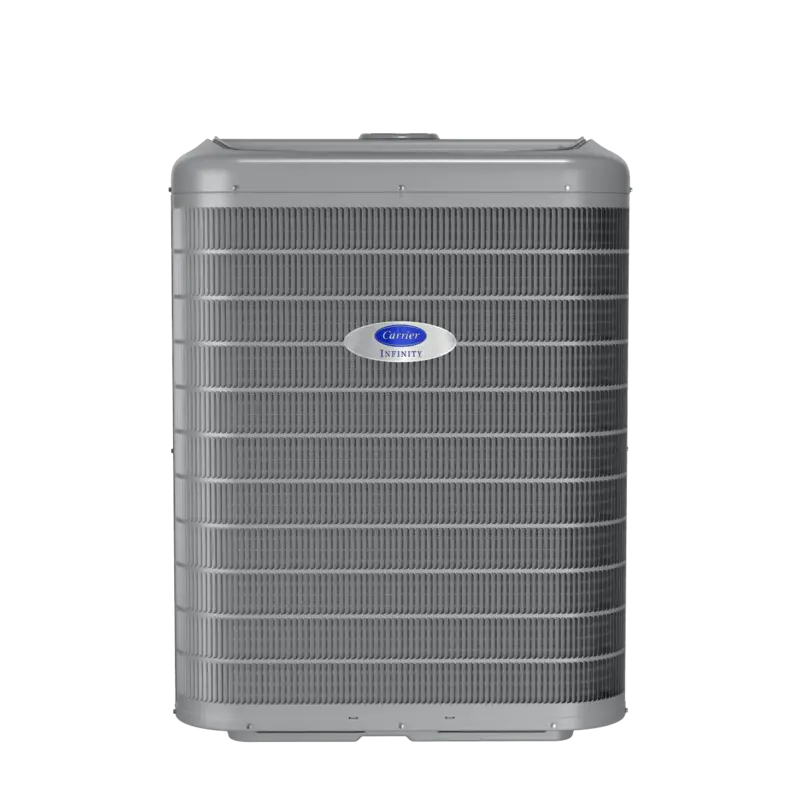
Carrier Good, Better, BEST Review · Atlas AC
Trane XV20i 20 SEER HVAC Review · David Lewis

Trane Spine Fin Coil Technology
Trane’s patented Spine Fin all-aluminum coil is the most cited Trane competitive differentiator. The technology delivers measurable corrosion resistance and brazing-joint reduction over standard copper-aluminum coils used by Carrier and most competitors.
| Spine Fin Spec | Trane | Industry Standard (Carrier) |
|---|---|---|
| Salt spray exposure rating | 2,000 hours | 1,000 hours |
| Corrosion potential vs copper-aluminum | 5× lower | Baseline |
| Brazed joints in coil construction | ~90% fewer | Baseline |
| Coastal SKU required | No (integrated) | Yes (***C variants) |
The 2,000-hour salt spray rating is twice the industry standard. Carrier sells separate ***C Coastal variants (Performance 18 Coastal 26TPA8***C, Comfort 16 Coastal 26SCA5***C) for coastal installations. Trane integrates corrosion resistance across the standard lineup.
When Spine Fin Tips the Decision
Coastal homeowners in Florida, the Gulf Coast, and the Carolinas often select Trane over Carrier specifically for the Spine Fin coil. The technology extends equipment lifespan by 3–5 years in salt-air environments compared to standard copper-aluminum coils. The premium versus Carrier disappears when you account for needing the Coastal SKU on the Carrier side.
Product Lineup Head-to-Head
Central AC Flagships
| Tier | Carrier Model | SEER2 / Refrigerant | Trane Model | SEER2 / Refrigerant |
|---|---|---|---|---|
| Premium variable | 26VNA1 (Infinity 21) | 21.0 / R-454B | XV20i | Not published cleanly / R-410A (May 2026) |
| Premium two-stage | 26TPA8 (Performance 18) | 18.0 / R-454B | XL18i | Tier-dependent / mixed |
| Mid single-stage | 26SPA6 (Performance 16) | 16.5 / R-454B | XR16 | Tier-dependent / R-410A (May 2026) |
| Entry | 26SCA4 (Comfort 14) | 16.0 / R-454B | XR14 | Entry / R-454B (XR15 first) |
Trane Refrigerant Transition Lag
Trane XV20i variable-speed flagship and XR16 single-stage product pages still list R-410A as of May 2026. The XR15 was Trane’s first R-454B-compliant model (introduced 2024). Trane completed manufacturing date compliance with the federal AIM Act (January 1, 2025 cutoff for new R-410A production) but website documentation lags the manufacturing reality.
Pricing Comparison
PICKHVAC 2025 data shows Carrier and Trane installed pricing within roughly 2% across equivalent tonnages — closer than the “within 5%” estimate commonly cited.
| Tonnage | Carrier Installed (PICKHVAC) | Trane Installed (PICKHVAC) |
|---|---|---|
| 3 ton | $4,500–$7,300 | $4,580–$7,160 |
| Average differential | ~2% | ~2% |
Trane Publishes 2026 Price Guide
Trane publishes a 2026 price guide on the corporate website with Choice, Priority, and Premier tier breakdowns. Carrier does not publish MSRP — the official prices page directs visitors to “contact your local Carrier dealer for an evaluation.” The pricing transparency favors Trane for buyers who want documented tier-level pricing before requesting quotes.
Sister-Brand Pricing Alternatives
Both brands have sister-brand pricing alternatives. Bryant delivers identical Carrier hardware at 10–15% lower installed pricing through different dealer distribution. American Standard delivers Trane Technologies engineering at 5–10% lower installed pricing through Customer Care Dealer networks. Cross-check sister-brand quotes when comparing Carrier and Trane.
Warranty Comparison
| Warranty Component | Carrier | Trane |
|---|---|---|
| Registration window | 90 days | 60 days |
| Default (unregistered) | 5 years parts | 5 years parts |
| Registered parts | 10 years (Consumer Choice option 1) | 10 years |
| Registered parts + labor option | 5y parts + 3y labor (Consumer Choice option 2) | Not advertised standard |
| Compressor (premium tier) | 10 years (Consumer Choice) | Up to 12 years select XL/XV |
| Heat exchanger (premium furnace) | Lifetime (59MN7) | Varies by model |
Trane edges Carrier on compressor coverage length under the select XL/XV premium tier (12 vs 10 years). Carrier wins on registration window (90 vs 60 days) and the Consumer Choice 5-year parts plus 3-year labor option that Trane does not advertise as a standard program.
Reliability Data
Consumer Reports third-party recap data delivers the cleanest reliability comparison. Trane leads on predicted reliability; the two brands tie on owner satisfaction.
| Metric | Carrier | Trane |
|---|---|---|
| Predicted reliability (Consumer Reports recap) | 4/5 | 5/5 (highest of major brands) |
| Owner satisfaction | 5/5 | 5/5 |
| Lifespan estimate | 15–20 years | 18–22 years |
| 2024 reliability survey (HVAC Compared) | 4.6/5 comfort/efficiency | 4.7/5 durability |
Trane “America’s Most Trusted” Recognition
Lifestory Research awarded Trane the “America’s Most Trusted HVAC Brand” designation for 12 consecutive years as of January 2026 (Net Trust Quotient 113.7, 12,328-consumer survey). The recognition increased from 10 years in 2024 — Trane has retained the award annually through 2026.
Refrigerant Transition Status
This is the single most consequential 2026 difference between Carrier and Trane.
Carrier (Complete Transition)
Carrier completed R-454B transition across all residential central AC models as of May 2026. The brand fully transitioned ahead of the federal AIM Act manufacturing deadline. Buyers selecting Carrier in 2026 receive refrigerant currency throughout the 15-20 year equipment lifespan.
Trane (Mixed Transition)
Trane completed manufacturing date compliance but XV20i variable-speed flagship and XR16 product pages still list R-410A as of May 2026. The XR15 was first R-454B model (2024). Buyers selecting Trane in 2026 should verify the specific SKU refrigerant on the equipment data plate or written quote before signing.
Both Brands Face R-454B Service Cost
Once Trane completes transition, both Carrier and Trane buyers face the same 2026 R-454B service cost reality. Aftermarket R-454B cylinders ran $700–$2,000 per 20-pound cylinder in early 2026 (up from $345 in 2021). R-32 brands (Goodman, Daikin, Amana) deliver materially lower service costs.
METUS Joint Venture (Trane Unique)
Trane Technologies operates the METUS (Mitsubishi Electric Trane HVAC US) 50/50 joint venture with Mitsubishi Electric — formed in May 2018. METUS distributes Mitsubishi mini-split equipment in the US under three badges: Mitsubishi Electric, Trane Mitsubishi Electric, and American Standard Mitsubishi Electric. METUS launched the R-454B series on April 17, 2025 (FX, GX, HX, WX, SMART MULTI lines).
Implication for Buyers
Trane Comfort Specialists can offer Mitsubishi mini-split equipment through METUS distribution alongside Trane central AC and heat pump systems. This expands equipment options within a single dealer relationship. Carrier mini-splits (38MPRB, 38MARB, 38MGRB family) are Carrier-branded equipment without a separate Mitsubishi partnership.
Dealer Network Comparison
Carrier Factory Authorized Dealer (FAD)
Carrier operates the FAD program with stricter training, technical certification, and customer satisfaction requirements than general Carrier dealers. The FAD designation appears on the Carrier dealer locator. FAD installations provide quality-screened service that general dealers don’t match.
Trane Comfort Specialist
Trane operates the Comfort Specialist program at the equivalent tier. Comfort Specialists meet additional training and customer satisfaction requirements. Independent dealers carrying Trane without Comfort Specialist status offer the equipment without the install-quality screening.
Both networks operate at similar coverage density in major US metros. Rural and smaller markets may favor whichever brand has stronger dealer concentration locally.
How to Choose Between Carrier and Trane
Five primary inputs drive the decision between Carrier and Trane.
Choose Carrier If
- Refrigerant currency matters (R-454B transition complete)
- 90-day warranty registration window appeals
- Consumer Choice labor warranty option fits your needs
- Bryant sister-brand pricing alternative is available locally
- Carrier FAD network density exceeds Trane Comfort Specialist density in your ZIP code
Choose Trane If
- Coastal installation requires Spine Fin corrosion resistance
- Maximum reliability data matters (Consumer Reports 5/5)
- Longer equipment lifespan justifies premium tier (18–22 vs 15–20 years)
- Published price guide transparency appeals
- METUS mini-split access through Trane dealer matters
- American Standard sister-brand discount is available locally
Both Brands Compete on
- Installed pricing within roughly 2% (PICKHVAC 2025)
- Premium-tier positioning (top 4 US residential HVAC)
- 5/5 owner satisfaction ratings
- Strong dealer screening programs (FAD vs Comfort Specialist)
- Comparable mid-tier and entry-tier equipment quality
Brand Heritage and Corporate Structure
Carrier was founded in 1915 by Willis Carrier; Trane in 1885 by James Trane — making Trane 30 years older. Both became standalone NYSE-listed companies in early 2020 through parent-company spin-offs: Carrier Global Corporation (NYSE: CARR) from UTC in April 2020; Trane Technologies plc (NYSE: TT) from Ingersoll-Rand in February–March 2020. Carrier’s sister brand is Bryant; Trane’s is American Standard. Trane Technologies formed the METUS 50/50 joint venture with Mitsubishi Electric in May 2018. Both brands maintain extensive US manufacturing.
Related reading


Frequently asked questions
Both brands rank at the top tier of US residential HVAC with installed pricing within 2%. Trane wins on Consumer Reports predicted reliability (5/5 vs Carrier 4/5), Spine Fin coil for coastal corrosion resistance, and 12-year “America’s Most Trusted” award. Carrier wins on R-454B refrigerant transition (complete vs Trane mixed), 90-day warranty registration (vs Trane 60), and Consumer Choice labor warranty option.
Consumer Reports third-party recap data places Trane at 5/5 predicted reliability versus Carrier 4/5. Owner satisfaction ties at 5/5 for both. Trane lifespan estimates run 18–22 years versus Carrier 15–20 years. Lifestory Research awarded Trane “America’s Most Trusted HVAC Brand” for 12 consecutive years as of January 2026.
Spine Fin is Trane’s patented all-aluminum coil technology rated for 2,000-hour salt spray exposure — twice the industry standard. The all-aluminum architecture reduces brazed joints by approximately 90% versus traditional copper-aluminum coils. Spine Fin equipment installs in coastal environments without separate Coastal SKU upgrades that Carrier requires (such as 26TPA8***C).
Carrier completed R-454B refrigerant transition across all residential central AC models. Trane completed manufacturing date compliance but XV20i and XR16 product pages still list R-410A as of May 2026. The XR15 was Trane’s first R-454B model (2024). Carrier currently has the refrigerant currency advantage in 2026.
Carrier offers 90-day registration window (vs Trane 60). Carrier Consumer Choice provides 10-year parts OR 5-year parts plus 3-year labor option. Trane offers 10-year parts plus up to 12-year compressor warranty on select XL/XV premium models. Trane wins on compressor length for premium equipment; Carrier wins on registration window and labor coverage availability.
PICKHVAC 2025 data places Carrier 3-ton installed at $4,500–$7,300 versus Trane $4,580–$7,160 — within 2% of each other. The brands are functionally tied on pricing. Sister-brand alternatives provide pricing differentiation: Bryant (Carrier sister) runs 10–15% below Carrier; American Standard (Trane sister) runs 5–10% below Trane.