
Lennox HVAC Review 2026: Models, Warranty, Pricing & Verdict
Founded 1895 by Dave Lennox. Standalone NYSE: LII. SL25KCV at 26.0 SEER2 leads residential central AC efficiency. Mixed R-454B/R-410A transition status as of May 2026.
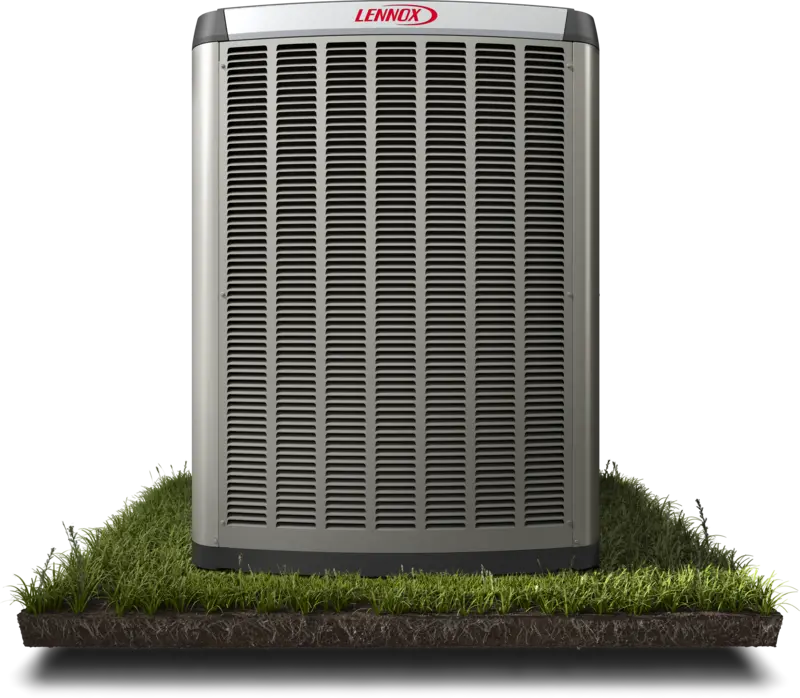
Brand facts
- Founded
- 1895
- Headquarters
- Richardson, Texas, USA
- Parent company
- Lennox International Inc. (NYSE: LII)
- Website
- Official site
Lennox holds the residential SEER2 efficiency crown in 2026 with the SL25KCV reaching 26.0 SEER2 on R-454B refrigerant. The historic flagship SL28XCV still ships on legacy R-410A. Warranty registration window is 60 days. Premier Dealer access varies by region. Proprietary parts add repair friction in markets with sparse coverage.
Who should buy a Lennox HVAC system
Lennox suits three buyer profiles especially well. Efficiency-first homeowners in hot climates choose Lennox for the SL25KCV (26.0 SEER2) or EL22KCV (22.5 SEER2) because no other R-454B central air conditioner currently matches those ratings. Premium-feature buyers chasing variable-capacity inverter technology select the Signature Collection tier because Lennox built the Precise Comfort® system across multiple SKUs. Long-stay owners in IECC climate zones 1–3 recover the Signature premium across 12–18 years of ownership.
Three buyer profiles should look elsewhere. Coastal homeowners in Florida, the Gulf Coast, or the Carolinas typically prefer Trane because the Spine Fin coil rated for 2,000-hour salt spray outperforms standard coils. Budget-conscious replacement buyers find Goodman or Bryant deliver acceptable equipment at 20–30% lower installed cost. Owners in markets with thin Lennox Premier Dealer coverage face longer repair downtime because Lennox uses proprietary parts that non-Lennox dealers cannot easily source.
Strengths and weaknesses at a glance
Lennox earns the premium for efficiency-first buyers in hot climates with long ownership horizons. The SL25KCV at 26.0 SEER2 R-454B currently leads the central AC efficiency race in the R-454B refrigerant camp. The Signature Collection variable-capacity Precise Comfort® inverter delivers humidity control and quiet operation that few competitors match. The Premier Dealer program provides quality-screened installation when Lennox Premier coverage exists in your market.
The case against Lennox has two dimensions. First, the historic SL28XCV flagship still ships R-410A while Carrier has completed R-454B transition — buyers selecting SL28XCV in 2026 inherit the refrigerant phase-down concern. Second, the Lennox proprietary parts architecture creates service-channel concentration risk in markets with sparse Premier Dealer coverage. Coastal buyers often find Trane’s Spine Fin coil delivers better long-term corrosion resistance. Budget-conscious buyers find Goodman delivers acceptable equipment at 20–30% lower installed cost.
Lennox belongs on every premium-tier short list in 2026. The brand does not deserve a default win — verify SEER2 ratings on the specific SKU your dealer proposes, confirm Premier Dealer density in your ZIP code, register within 60 days, and compare against Carrier and Trane before signing.
Lennox product lineup: three tiers, 13+ models
Lennox publishes a comprehensive residential lineup across three tiers: Dave Lennox Signature® Collection (premium), Elite® Series (mid), and Merit® Series (entry). The lineup includes 13+ central air conditioner models, 10+ heat pump models, and matching gas furnace platforms. Models split into mixed refrigerant transition status: some models ship R-454B, others remain on legacy R-410A as of May 2026.
Dave Lennox Signature® Collection (Premium)
The Signature Collection includes the SL25KCV (26.0 SEER2, R-454B, sound as low as 58 dB), the historic SL28XCV (25.80 SEER2 / 28.00 legacy SEER, R-410A, sound as low as 59 dB), and the XC21 (19.2 SEER2, two-stage, Northern region only). All Signature Collection central AC models use variable-capacity Precise Comfort® inverter technology paired with the S40 Smart Thermostat.
Elite® Series (Mid)
The Elite Series spans 9+ central AC models from the EL23XCV (22.4 SEER2) and EL22KCV (22.5 SEER2) variable-capacity flagships down to the EL15KC1 (16.0 SEER2) single-stage Northern-only entry. The mid-tier covers two-stage and variable-capacity inverter options at lower price points than Signature equipment.
Merit® Series (Entry)
The Merit Series targets value-tier buyers with the ML18XC2 (17.8 SEER2 two-stage), ML17KC2 (18.0 SEER2 two-stage), and ML17XC1 (16.2 SEER2 single-stage). Northern-only variants include ML13KC1 (13.4 SEER2) and ML14XC1 (13.4 SEER2) for buyers in cold climates where cooling demand is moderate.
Heat Pumps
Lennox heat pumps mirror the central AC tier structure. The Signature SL25XPV (23.0 SEER2 / 10.3 HSPF2) leads on variable-capacity technology with the Quantum Coil. The cold-climate Signature SL22KLV (21.10 SEER2 / 10.5 HSPF2) carries Lennox’s rated operating capability to -22°F per spec sheet — though real-world performance varies by installation and climate. The Elite EL22XPV reaches 22.0 SEER2 / 9.5 HSPF2. The Merit ML17XP1 sits at 14.3 SEER2 / 7.5 HSPF2 single-stage for budget cold-climate replacements.
Video: Lennox Central Air Conditioner - What You Should Know Before Buying! · D Air Conditioning
Lennox pricing by tonnage
Lennox installed pricing typically positions in the premium tier alongside Carrier and Trane. The brand does not publish model-specific MSRP. Distributors and Premier Dealers set local installed pricing based on equipment selection, tonnage, regional labor rates, and ductwork modifications required.
| Tonnage | Estimated installed range (national) | Notes |
|---|---|---|
| 2 ton | $4,000–$8,500 | Signature variable-capacity premium end of range |
| 3 ton | $4,500–$10,000 | Most common residential size |
| 4 ton | $5,500–$11,500 | Homes 2,000–2,500 sqft |
| 5 ton | $6,500–$13,500 | Large homes or poorly insulated buildings |
Three pricing factors drive the spread. Regional labor rates differ significantly: rates in California, the Northeast, and Pacific Northwest run 30–40% above national averages. Tier selection adds material cost: Signature variable-capacity equipment typically commands $2,000–$4,000 over equivalent Merit single-stage equipment at the same tonnage. Ductwork modifications often add $1,500–$5,000 when existing duct systems require resizing for higher-SEER2 equipment.
Request quotes from at least three Lennox Premier Dealers in your ZIP code. Itemize every quote: equipment, labor, refrigerant, electrical work, permits, and disposal broken out separately. Bundled all-in quotes hide significant pricing variance between dealers.
Sister-brand alternatives often deliver Lennox-quality hardware at lower price points. Armstrong Air, AirEase, and Concord (all under Allied Air) typically run 10–15% below Lennox-branded equipment. Verify the Allied Air dealer in your market and compare quotes against Lennox Premier Dealers before signing.
Efficiency, performance, and refrigerant transition
SEER2 (Seasonal Energy Efficiency Ratio, 2023 federal test methodology) replaced the legacy SEER scale in 2023. The new test conditions account for real ductwork static pressure, producing ratings approximately 5% lower than identical hardware would score under the old SEER scale. Always verify which scale a product spec uses before comparing.
The most common confusion in the Lennox lineup involves the SL28XCV. The “28” in the model name refers to legacy SEER (28.00) — not SEER2. The actual SEER2 rating is 25.80. Buyers comparing SL28XCV against newer R-454B equipment often misread the model number as a SEER2 figure, which inflates the perceived efficiency.
| Lennox model | SEER2 rating | Legacy SEER | Refrigerant | Tier |
|---|---|---|---|---|
| SL25KCV | 26.0 | not stated | R-454B | Signature |
| SL28XCV | 25.80 | 28.00 | R-410A | Signature |
| EL22KCV | 22.5 | not stated | R-454B (verify per coil pair) | Elite |
| EL23XCV | 22.4 | 22.0 | mixed | Elite |
| EL18KCV | 19.5 | not stated | mixed | Elite |
| ML17KC2 | 18.0 | not stated | mixed | Merit |
For tax credit eligibility, ENERGY STAR Most Efficient certification, and state rebate programs, the SEER2 number is what counts. Always pull the AHRI Reference Number for the exact outdoor-plus-indoor coil pairing. AHRI publishes certified matched-system ratings that supersede peak model marketing claims.
Federal AIM Act rules required HVAC manufacturers to stop producing new R-410A units after January 1, 2025. R-410A units must be installed by January 1, 2026. Each manufacturer picked a replacement refrigerant. Lennox chose R-454B alongside Carrier, Bryant, Trane, Rheem, and York. Goodman, Daikin, and Amana chose R-32 (Daikin proprietary).
Lennox’s R-454B transition remains incomplete as of May 2026. The historic flagship SL28XCV still ships on R-410A refrigerant. The new SL25KCV is the R-454B successor and currently leads the R-454B central AC SEER2 race at 26.0. Other Signature and Elite models exist in mixed transition status with some R-454B variants and some R-410A holdouts.
Carrier completed R-454B transition across all residential central AC models. Carrier buyers in 2026 gain refrigerant currency that Lennox buyers selecting the SL28XCV do not. This matters at refrigerant phase-down service time over the 12–18 year equipment lifespan — R-410A refrigerant pricing will rise as production phases out completely.
The 2026 cost reality on R-454B is harsh for service. Aftermarket R-454B cylinders ran $700–$2,000 per 20-pound cylinder in early 2026, up from $345 in 2021. Honeywell added a 42% surcharge on R-454B earlier this year. A typical residential leak repair takes 2–6 pounds of refrigerant. The math affects Lennox R-454B buyers and Carrier R-454B buyers equally — the trade-off is across both R-454B brands, not specific to one.
Lennox warranty: 60-day registration window decoded
Lennox warranty terms vary by product tier and registration status. The registration window is 60 days after installation. This is tighter than Carrier’s 90-day window and matches Trane and Goodman. Missing the deadline drops coverage to the default 5-year parts warranty with no labor coverage.
Dave Lennox Signature® Collection (default before registration): 10 years parts limited warranty plus a lifetime or 20-year heat exchanger warranty depending on furnace model and registration status.
Dave Lennox Signature® Collection (extended on registration): Buyers select one of two options upon timely registration: 12 years parts limited warranty, OR 10 years parts plus 3 years labor limited warranty.
Elite® Series: Reduced terms versus Signature, typically 10 years parts on registered units with shorter heat exchanger coverage on furnaces.
Merit® Series: Entry-tier warranty terms apply, typically 5–10 years parts depending on model and registration.
Register your Lennox equipment at lennox.com within 60 days. The deadline starts the day the unit is energized, not the contract date. Keep the registration confirmation email permanently. Most warranty denials trace back to missed or late registration paperwork — often because the installing contractor failed to file it.
Three warranty exclusions matter. Labor is excluded under the standard parts-only option (covered only under the 10+3 labor extended option for Signature equipment). Refrigerant during leak repair is excluded from parts warranty. Second-owner coverage transfers once at reduced terms within 90 days of property sale.
Reliability and known issues
Three documented issues have shaped Lennox’s reliability reputation over the past decade. Each affects the buying calculation in distinct ways.
2015 Thomas v. Lennox class action lawsuit. This nationwide class action addressed formicary corrosion failures on Lennox evaporator coils. Class members received $550 reimbursement under the settlement. Lennox addressed the underlying defect by transitioning to the Quantum coil design, which current production models use. The corrosion class action affects buyers' perception of older Lennox installations but does not directly impact 2026-built equipment with Quantum coils. However, Quantum coils do not eliminate all formicary corrosion potential — corrosion can still develop from indoor air contaminants over multi-year service life.
2020 CPSC ductless heat pump fire-hazard recall. Approximately 1,650 Lennox ductless heat pump units sold between January 2016 and November 2019 were recalled due to fire risk. CPSC documented the recall scope and remedy. Buyers of Lennox ductless equipment from that period should verify serial numbers against the recall database.
Consumer Reports reliability feedback. Third-party recaps of Consumer Reports survey data characterize Lennox as having “more mixed reliability feedback” than Carrier and Trane. Owner satisfaction ratings appear comparable across the three brands, but predicted reliability scoring puts Trane (5/5) and Carrier (4/5) above Lennox in published recaps.
HVAC-Talk forum sentiment. Technicians active on HVAC-Talk forums occasionally cite Lennox proprietary parts availability concerns. Repair downtime extends in markets with sparse Lennox Premier Dealer coverage because non-Lennox contractors cannot source replacement components quickly. Concentrate this concern by checking Premier Dealer density in your ZIP code before purchase.
Lennox engineering uses proprietary refrigerant coil designs and proprietary control board architecture across multiple product tiers. This creates a service trade-off that buyers should understand before purchase. Parts are typically available only through Lennox dealer networks. Non-Lennox HVAC contractors cannot easily source replacement components, which can mean longer repair downtime in markets with sparse Lennox dealer coverage.
The trade-off works in two directions. On the upside, Lennox proprietary engineering enables features like the Precise Comfort variable-capacity inverter and the Quantum Coil corrosion-resistant evaporator. The integration depth between components delivers efficiency and comfort that mixed-source competitors cannot match without aftermarket modifications. On the downside, buyers locked into the Lennox ecosystem for service face limited repair-shop alternatives during emergencies.
Verify Lennox Premier Dealer density in your ZIP code before purchase. Markets with 5+ Premier Dealers within 30 miles offer redundancy. Markets with 1–2 dealers carry concentration risk if your primary dealer goes out of business or scales back operations.
How Lennox compares to Carrier, Trane, and Goodman
Lennox occupies a specific position in the US residential HVAC competitive landscape. The comparison below summarizes verified competitive context across the four major brands.
| Brand | Flagship SEER2 | Refrigerant (flagship) | Registration window | Reliability tier |
|---|---|---|---|---|
| Lennox | 26.0 (SL25KCV R-454B) | mixed (SL28XCV still R-410A) | 60 days | Mixed feedback |
| Carrier | 21.0 (26VNA1) | R-454B (full transition) | 90 days | 4/5 CR predicted |
| Trane | not published cleanly | Mixed (XV20i still R-410A May 2026) | 60 days | 5/5 CR predicted |
| Goodman | 22.5 (GSXV9) | R-32 (Daikin) | 60 days | Below top tier |
vs Carrier: Lennox SL25KCV at 26.0 SEER2 exceeds Carrier 26VNA1 at 21.0 SEER2 by 5 efficiency points. Carrier has completed R-454B transition across the lineup; Lennox flagship SL28XCV still ships R-410A. Carrier offers Consumer Choice (10-year parts OR 5-year parts plus 3-year labor) with a 90-day registration window. Lennox provides 12-year parts OR 10-year parts plus 3-year labor at 60 days. Carrier reliability rating sits 1 point above Lennox per Consumer Reports recap data.
vs Trane: Trane reliability data is stronger at 5/5 Consumer Reports predicted versus Lennox’s mixed reviews. Trane’s patented all-aluminum Spine Fin coil rated for 2,000-hour salt spray outperforms standard coils in coastal applications. Trane has not completed R-454B transition (XV20i and XR16 still list R-410A May 2026). Both brands operate 60-day registration windows.
vs Goodman: Goodman occupies the value tier 20–30% below Lennox installed pricing. The Goodman GSXV9 reaches 22.5 SEER2 — competitive but trailing Lennox SL25KCV at 26.0. Goodman uses R-32 refrigerant (Daikin proprietary), which currently delivers cheaper service costs than R-454B refrigerant systems due to refrigerant supply chain pricing.
Rebates, incentives, and total cost
The federal Section 25C Energy Efficient Home Improvement Credit terminated December 31, 2025, under the One Big Beautiful Bill Act. Installations completed by December 31, 2025, can still be claimed on the 2025 tax return filed during the 2026 tax season. For 2026 installs, there is no federal credit available.
For 2026 installations, look to state HEAR (HEEHRA) rebates where your state has launched the program. Currently 15 states accept applications: NM, WI, NY, RI, MA, NC, GA, MI, MD, IN, IL, CO, WA, ME, and AZ. Income tier qualification under Area Median Income rules determines rebate amount. Homeowners at or below 80% AMI qualify for 100% rebate up to program caps. Homeowners between 80–150% AMI qualify for 50% rebate. Homeowners above 150% AMI are ineligible for HEAR. The HVAC cap under HEAR is $8,000 for heat pumps. Use the AMI lookup at huduser.gov to determine your income tier before planning a purchase.
Texas, Florida, Ohio, Virginia, and Minnesota have not yet launched HEAR programs. Buyers in those states should look to utility rebates and state-level efficiency incentive programs instead.
How to buy a Lennox HVAC system: the five-decision process
Buying Lennox is not a single decision. It is five sequential choices that compound into the final ownership value.
1. Get a Manual J load calculation
Most homes are oversized. The existing equipment tonnage was probably wrong when it was installed years ago. A correctly sized 3-ton unit dehumidifies better than an oversized 4-ton, runs longer cycles, and saves energy. ACCA Manual J is the residential load calculation standard. If a Lennox Premier Dealer skips Manual J, do not sign the contract.
2. Select the tier honestly
Merit Series fits short ownership timelines and budget-conscious replacements in mild climates. Elite Series suits the value sweet spot for mid-tier efficiency and comfort. Signature Collection earns the premium only for long-stay owners in hot climates who prioritize peak efficiency. The SL25KCV at 26.0 SEER2 R-454B suits long-stay efficiency-first buyers. The SL28XCV at 25.80 SEER2 R-410A makes sense only for buyers comfortable with the refrigerant phase-down trade-off.
3. Verify Premier Dealer density in your ZIP code
Use lennox.com Premier Dealer locator to count dealers within 30 miles of your address. Markets with 5+ Premier Dealers offer service redundancy. Markets with 1–2 dealers carry concentration risk for proprietary parts service. If your market has thin Premier Dealer coverage, consider Carrier, Trane, or Goodman alternatives.
4. Request three Premier Dealer quotes
Get itemized quotes from at least three Lennox Premier Dealers. Itemize equipment, labor, refrigerant, electrical, permit, and disposal of old unit broken out separately. Cross-check each dealer’s BBB rating, Google review depth (50+ reviews), and state HVAC contractor license status. EPA Section 608 certification is mandatory for refrigerant handling.
Lennox sells through two channels: Premier Dealers and independent contractors carrying the Lennox brand without Premier status. The Premier Dealer program applies training, technical certification, and customer satisfaction requirements that the general dealer network does not match. Buyers select Premier Dealers when installation quality matters most.
The Lennox Premier Dealer locator on lennox.com filters by ZIP code. Independent verification helps:
- Check Better Business Bureau ratings and Google review depth (50+ reviews across multiple years)
- Verify state HVAC contractor licensing status (~35 states require state license; others local)
- Confirm EPA Section 608 certification for refrigerant handling (federally required, never expires)
- Request proof of insurance and bond coverage for major installations
Three install quality factors compound across equipment lifespan. Proper Manual J load calculation by ACCA standards is the foundation. Correct refrigerant charging follows the manufacturer’s pressure-temperature specifications. Sealed ductwork at registers and at all joints prevents 20–30% efficiency losses that can negate the SEER2 premium.
5. Register at lennox.com within 60 days
The 60-day registration window starts the day the unit is energized, not the contract date. Register the equipment yourself rather than trusting the dealer to file it. Most warranty denials trace back to missing registration. Keep the confirmation email permanently. The 60-day deadline is tight — calendar it immediately upon installation.
Company background and ownership
Lennox was founded in 1895 by Dave Lennox, making it one of the oldest continuously operating HVAC manufacturers in the United States. The company operates today as Lennox International Inc., publicly traded on the NYSE under the ticker LII. Headquarters are in Richardson, Texas. Unlike Carrier (UTC spin-off 2020) and Trane (Ingersoll Rand spin-off 2020), Lennox has remained independent throughout its 131-year history.
Lennox owns multiple sister brands under the Allied Air subsidiary. Allied Air manufactures the Armstrong Air, AirEase, and Concord brands, all distributed through independent contractor networks rather than Lennox Premier Dealers. Aire-Flo rounds out the secondary brand portfolio. The sister brands typically run 10–15% below Lennox-branded equipment installed.
Lennox chose R-454B as its A2L refrigerant replacement, placing it in the same refrigerant camp as Carrier, Bryant, Trane, Rheem, and York. The Daikin-owned brands (Goodman, Amana, Daikin) chose R-32. Proprietary parts engineering means service depends on the Lennox Premier Dealer network — a design decision that has shaped Lennox’s service model throughout its history and continues to distinguish it in 2026.
Frequently asked questions
Lennox holds the residential SEER2 efficiency crown in 2026 with the SL25KCV at 26.0 SEER2 R-454B. Build quality and engineering meet premium-tier standards. Reliability ratings sit slightly below Carrier and Trane per Consumer Reports recap data. The trade-off is proprietary parts that limit service options outside the Lennox Premier Dealer network. Best fit for efficiency-first long-stay buyers in hot climates.
The SL25KCV at 26.0 SEER2 on R-454B refrigerant. This currently leads the residential R-454B central AC SEER2 race. The historic SL28XCV (25.80 SEER2 on R-410A) is the prior efficiency leader but does not match SL25KCV. Note: “SL28XCV 28 SEER” refers to legacy SEER (28.00), not SEER2. Always verify the SEER2 number, not the model name.
No. Lennox requires registration at lennox.com within 60 days of installation. Without registration, warranty drops to 5 years parts only. With registration, Signature Collection buyers select one of two extended options: 12 years parts limited warranty, OR 10 years parts plus 3 years labor limited warranty. The 60-day window is tighter than Carrier’s 90-day window — calendar the deadline immediately upon installation.
The 2015 Thomas v. Lennox nationwide class action addressed formicary corrosion failures on Lennox evaporator coils. Class members received $550 reimbursement under the settlement. Lennox addressed the underlying defect by transitioning to the Quantum coil design used across current production models. The class action does not directly affect 2026 Lennox installations with Quantum coils, but the corrosion class history remains part of brand reputation discussions.
Lennox is in transition. The SL25KCV ships R-454B. The historic SL28XCV flagship still ships R-410A as of May 2026. Other models exist in mixed transition status across the Signature, Elite, and Merit tiers. Buyers should verify the specific SKU refrigerant before signing. Carrier completed full R-454B transition across all residential central AC models — a competitive advantage at the equipment-purchase decision point.
No. The federal Section 25C Energy Efficient Home Improvement Credit terminated December 31, 2025, under the One Big Beautiful Bill Act. Installations completed by December 31, 2025, can still be claimed on the 2025 tax return filed during the 2026 tax season. For 2026 installs, look to state HEAR (HEEHRA) rebates where your state has launched the program. Currently 15 states accept applications. Income tier qualification under Area Median Income rules determines rebate amount.
Lennox International manufactures residential HVAC equipment in multiple US facilities. Headquarters operations are in Richardson, Texas. The Allied Air subsidiary manufactures the Armstrong Air, AirEase, and Concord sister brands at separate facilities. Lennox-branded equipment carries Lennox engineering and proprietary parts architecture across all tiers.
Lennox requires 60-day registration; Carrier allows 90 days. Both offer extended labor coverage options on registered units. Lennox Signature Collection extended terms reach 12 years parts OR 10 years parts plus 3 years labor. Carrier Consumer Choice reaches 10 years parts only OR 5 years parts plus 3 years labor. Lennox edges out on parts term length under the longer-parts option. Carrier wins on registration window length and labor coverage availability across more dealers.